Best smartwatch 2016

Best smartwatch 2016

Best smartwatch 2016: Apple, Pebble, Samsung, Sony, Tag and more

We help you pick the perfect companion for your wrist

The best smartwatches in the world


Picking the best smartwatch for you is now a good problem to have, given the breadth of choice on offer. With Samsung and Apple innovating and a strong field of Android Wear watches from big designers like Fossil, Nixon and Casio, there's never been a better time to buy.
There are plenty of new models in the pipeline too. The Apple Watch 2 will land sometime in 2016 and the likes of Nixon's The Mission and Michael Kors Access are on their way.
We've completely overhauled our best smartwatch guide to try and help those looking to make the right decision.

Stop press!

Before you make your decision, bear in mind that two new Pebbles have just landed on Kickstarter. Read our first look Pebble Time 2 review and first impressions of the Pebble 2 before you buy.

Best smartwatch

Samsung Gear S2

best smartwatch 2016
As easy to live with as a Pebble, as slick as an Apple Watch and with a tactile, rotating bezel as its secret weapon, the S2 is the kind of smartwatch you'd kick yourself for leaving at home. You'll have to pay extra for the cellular version to make the most of the GPS features but even the standard version feels like a leap forward.
The battery life is better than most rivals; we've used Android Wear watches day to day and Samsung's smartwatch beats these hands down. The lack of apps is a niggle, but we don't think it impacts the overall experience enough to recommend rivals over this device.
The full verdictOur Samsung Gear S2 review
From $299.99, samsung.com | Amazon

Best for iOS

Apple Watch

Best smartwatch
Whether you find the Apple Watch the leading example of fashion blended with tech or a boxy abomination is really down to personal taste. But for our money, it's one of the best looking smartwatches made to date (especially when paired with a quality Apple Watch strap) and, coming in two sizes, is one of the most unisex as well.
The build quality is superb, and the footprint of both the 38mm and 42mm watch is much smaller than you'd expect. Despite its flaws (poor sports features and the lack of GPS), the Apple Watch was one of the first wearables that was actually a pleasure to wear. The Apple Watch 2 is set to arrive soon though…
Wareable ratingApple Watch review
From $349, apple.com | Amazon

Best for outdoors

Casio Smart Outdoor WSD-F10

Until Nixon's The Mission comes along this autumn, Casio should be your first pick if you want an outdoorsy smartwatch. Okay it doesn't have GPS – and that's a problem – but it (somewhat) makes up for it with a host of sensors, modes for hiking, biking and fishing, two displays and the fact that it's dustproof and waterproof to 50m.
Just be warned this is a bit of a beast on slender wrists, though it does only weigh 92g with the bulky rubber strap.
Read our full Casio Smart Outdoor review to see how we got on with it.

Best if money's no object

Tag Heuer Connected

best smartwatch
It doesn't take long before you realise this Intel powered Tag smartwatch is the best built, and highest quality, Android Wear device to date. From afar it genuinely looks like a regular Tag Heuer watch – it's only when you get up close that you notice it's quite a bulky beast. Now available in rose gold, its watch faces are another delightful addition and after two years, you can trade it in for a mechanical Tag watch.

Best Android Wear option

Sony SmartWatch 3

best smartwatch
An old choice but a good choice, the Sony SmartWatch 3 has built-in GPS connectivity, which means you can leave your smartphone at home when you go for a run. (The Moto 360 Sport has matched it on that front now.)
The sports styling makes it perfect for a weekend jog, and while the screen is a little dull compared to some of its rivals, the latest Android Wear update means it can pair with wireless headphones for beats on the go. The Steel edition adds a touch of class to the smartwatch that we at Wareable (well,almost all of us) agree offers the most bang for your smartwatch buck.
From $138.40, sony.com | Amazon

Best for budget 

Asus ZenWatch 2

The focus of the ZenWatch 2 is choice, and Asus is approaching the evolving smartwatch market in a mature way. The second gen ZenWatch comes in two sizes – essentially male and female models. There's also a wealth of strap options including rubber, steel, leather and even a Swarovski covered one. This makes it a nice first step for potential Android Wear buyers.
While little has changed on the hardware front for the ZenWatch 2, the Taiwanese company has installed a Wi-Fi chip to make use of the new features in Android Wear, and fast charging tech means you can juice up 50% of the battery in around 30 minutes.
Check out our full ZenWatch 2 review.
From $149.99, asus.com | Amazon

Best for techies

Pebble Time

what is the best smartwatch
Everything that made the original brilliant is still on board: that affordable price, an impressive seven-day battery life and both iPhone and Android compatibility. There are also some serious upgrades to both the software and hardware, the most notable of which are the new colour e-paper screen and the revamped Timeline OS. Plus with the Pebble Time 2 on its way, this watch has dropped in price.
Wareable verdictPebble Time review
$99.99, pebble.com | Amazon

Best for battery life

Vector Watch

When it comes to smartwatch battery life, it doesn't come much longer than the Vector watch. With around 30 days from a single charge, the Vector will out-last most business trips and holidays, meaning you don't have to pack a separate charger for your travels. It's a competent smartwatch with notifications, fitness tracking and a clever way of visualising your day through rings placed around the watch face. Of course, 30 days of battery doesn't come without sacrifice, and the low-power screen does ruin the aesthetic. We'd also advise looking beyond the basic models for a far more pleasing finish.
Read the full verdictVector Luna review
Prices from $205.99, vectorwatch.com | Amazon

Most customisable

Moto 360 2

The Moto 360 2 comes in two sizes – 42mm and 46mm (with two different sized displays: 1.37 or 1.56-inch) – in fact, it's three sizes if you count the different band sizes on offer. Using Moto Maker, you can choose between hundreds of different combinations of straps, bezels, finishes and colours.
Put the new Moto 360 next to the first-gen Motorola watch and you can really see the subtle differences that turn this design into a watch rather than last year's circle on a strap.
Take a look at our Moto 360 review here.
From $299.99, motorola.com | Amazon

Best for sports

Garmin Vivoactive HR

This second gen Garmin smartwatch has the same 24/7 activity tracking and support for smartphone alerts as its predecessor, the Vivoactive. What it adds is Garmin's own Elevate heart rate tracking technology which monitors your HR continuously and gives accurate indications of calorie burn through the day and night. And it's better looking.
There's GPS and dedicated apps for cycling, swimming, running and golf plus support for skiing and paddle boarding too. Connect IQ adds apps while battery life is eight days, 13 hours with GPS. Look out for our full, in-depth review coming soon and check out our Garmin Vivoactive review for the last gen model.
$249.99, buy.garmin.com | Amazon

Best for running

Moto 360 Sport

what is the best smartwatch on sale?
At last, an Android Wear device to match the Sony SmartWatch 3's GPS skills – the Moto 360 Sport is actually a better running aid thanks to the Moto Body app already built in.
The Moto 360 Sport boasts an AnyLight LCD display that is naturally adaptable, meaning it should be nicely backlit in dim lighting situations but be easily readable when out running in sunnier conditions.
Read our full Moto 360 Sport review.
$299, motorola.com | Amazon

Best for affordable style

LG Watch Urbane

the best smartwatch
There's no missing the Urbane, whether it's the silver or gold model you're sporting; that fully round bezel is seriously eye- and light-catching. It's a smartwatch that looks like a traditional timepiece, and unlike the more premium-looking Urbane LTE, with its classic watch shape and extra physical buttons, the regular Urbane looks much more fashionable and feminine.
It's pretty pricey though. If you really want to go all out, the LG Watch Urbane Luxe features a 23-karat gold watchcase and handcrafted alligator leather strap. It's $1,200 mind.
$249, lg.com | Amazon

Best for display

Huawei Watch

top smartwatch best smartwatches
The stunning AMOLED display on Huawei's Android Wear debutant is a 1.4-inch, 400 x 400, one with a 286ppi count – the highest density on an Android Wear smartwatch so far.
The screen is made all the more impressive thanks to a 10,000:1 contrast ratio. Side by side with the smaller Moto 360 2 – its closest rival in terms of aesthetics – it's obviously a much clearer display. Not only because it offers genuine 360-degree visuals, but because everything just looks sharper.
Have a look at our Huawei Watch review.
From $399, consumer.huawei.com | Amazon

OnePlus 3 review

OnePlus 3 review


Introduction

A great act is tough to follow and sometimes delivering two great devices in a row requires that you take a completely different approach with the successor. Now on its third "flagship killer" (with the OnePlus X taking a different path), OnePlus has taken on the tough task to mature from a business standpoint, while still retaining that ambitious "never settle" attitude that brought it where it is today.
Only time will tell if that works out, but it's beyond the point of this review anyway. What we are determined to find out here is whether the OnePlus 3 is worth your hard-earned cash.
Oneplus 3 review
On paper, the formula is right - match the specs of rivals and undercut their pricing. However, it is the approach towards the latter that has really changed this time around. Instead of going for an absurdly low price and being unable to sort out production, mandating stuff like the dreaded invite system, OnePlus has gone to reasonable levels this time and dropped the sales tricks.
Overall, the OnePlus 3 is best described as driven by pragmatic choices. There is nothing really unusual, bold or even remotely eccentric from a design standpoint - just a really elegant and thin metal unibody with very few things that may raise questions. The same goes for the specs. They have always been more than robust in OnePlus devices, but typically hand-picked and arranged for optimal performance, rather than just there for the sake of pure numbers.

Key features

    • 5.5" Optic AMOLED display of 1080p resolution; 401ppi; Corning Gorilla Glass 4; Metal back
    • 64GB model with Snapdragon 820 chipset (2x Kryo at 2.15GHz and 2x Kryo at 1.6GHz cores); Adreno 530 GPU
    • 16MP f/2.0 main camera with OIS and phase detection autofocus, single LED flash; 2160p video at 30fps;
    • 8MP f/2.0 front-facing camera, 1080p video recording at 30fps
    • 4G LTE; Dual-SIM support; Wi-Fi a/b/g/n/ac; Bluetooth 4.2; NFC; GPS, GLONASS and BDS; Fingerprint reader; USB Type-C connector
    • Oxygen OS, based on Android 6.0.1 Marshmallow
    • 3,000mAh non-removable battery
    • Fast battery charging: 60% in 30 min (Dash Charge)

Main disadvantages

    • No microSD card slot
With a Snapdragon 820 SoC and Adreno 530 GPU, pushing pixels to an extremely power-efficient 1080p, 5.5-inch AMOLED panel, you don't expect any performance bottlenecks. If anything the 6GB of RAM put it ahead of the pack and with a Sony-made 16MP OIS camera imaging department holds plenty of promise too.
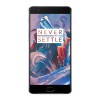
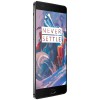
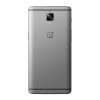
OnePlus 3 in official photos - Oneplus 3 review OnePlus 3 in official photos - Oneplus 3 review OnePlus 3 in official photos - Oneplus 3 review OnePlus 3 in official photos - Oneplus 3 review
OnePlus 3 in official photos
All bases seem covered, but a modern smartphone, and particularly a flagship is more than a mechanical sum of its parts. Premium user experience goes beyond the things you can put on a specs sheet and we are yet to see if OnePlus managed to deliver it. Follow along on the next page, as we unbox the 3 and take a closer look at its exterior.

ZTE Axon 7 review


ZTE Axon 7 review

By  Mobile phones 

Axon 7 wants to be your Samsung Galaxy S7 and iPhone 7 replacement


JUMP TO SECTION:


OUR VERDICT

ZTE Axon 7 is less expensive than the best flagship smartphones, yet it looks and performs like a top-tier Android Marshmallow handset, with front-facing speakers, 64GB of storage and only a few sacrifices.

FOR

  • Inexpensive, yet well designed
  • Generous 64GB of internal storage
  • Awesome dual front-facing speakers

AGAINST

  • Slippery in the hand
  • Not on all US carriers
  • Doesn't match Samsung's camera
Update: Our ZTE Axon 7 review now includes final benchmarks and a recommended badge due to its design, specs and performance at a reasonable price.
ZTE Axon 7 is a new Android phone with a sleek design, powerful specs and a reasonable price that challenges the Samsung Galaxy Note 7 and rumorediPhone 7 in its dual SIM, unlocked form.
That explains the confusing name of this successor to the ZTE Axon Pro (ZTE Axon Elite in the UK), which has skipped right over the ZTE Axon 2 through ZTE Axon 6 in between last year and now.
The Chinese phone maker is ambitiously trying to compete with the flagship manufacturers from the US and South Korea, so much so that it designed the phone outside of China - right in the US.

ZTE Axon 7

What we end up with is an Android Marshmallow smartphone with a polished metal design, 2K display, front-facing speakers, and software customizations often found in a more expensive handset.
It shouldn't be long before its operating system is upgraded, too. ZTE has promised to be the first Google Daydream VR smartphone as soon as the the proper Android Nougat update arrives.

ZTE Axon 7

ZTE Axon 7 doesn't outclass Samsung's top-of-the-line camera in the Samsung Galaxy S7, or the elegantly curved look of the Galaxy S7 Edge. It's just really, really close for the price.
It's not quite inexpensive enough to be part of our best cheap phones list, but it's definitely a candidate for TechRadar's next best phones list update. Let's break down why that is.

Release date and price

The ZTE Axon 7 release date was July 27 in the US, following pre-orders for the new phone that began on July 13. But you won't see it in the UK just yet or even US carrier stores.

ZTE Axon 7

A UK launch for the Axon 7 is planned at a later date (we'll keep you posted on this page), and its name won't change to Elite or anything else this time around like it did for the original Axon. ZTE said that it sees the value in making a unified, global push for its 2016 flagship phone.
You'll have to buy this phone unlocked on Amazon or another retailer and pay full price. It won't be sold at US carriers like AT&T, T-Mobile, Verizon or Sprint and you shouldn't expect subsidies.
While it technically has enough bands to support all US phone networks, it only works with AT&T and T-Mobile nano SIM cards for now. Verizon and Sprint compatibility is due "possibly later in the year," resting in the hands of the two CDMA carriers to flip a switch. All of the antennas are inside - this isn't just a GSM phone.
The good news here is that it's packed with 64GB of internal storage and costs $399 (about £300, AU$525). Plus, you won't have to deal with a pesky two-year (or any) contract or carrier app bloatware for that price.

ZTE Axon 7

There's also a 128GB ZTE Axon 7, which includes the company's own take on a "Force Touch" display, an always-on screen and 6GB of RAM. That makes it faster than the Samsung Galaxy S7 and S7 Edge, but there's no price or availability information. We'll have to see if that one ever makes it out of China.
All of this contrasts with the 32GB Samsung Galaxy S7 unlocked at $669 and 64GB iPhone 6S at $749. Take note that a 16GB iPhone is no longer acceptable for a comparison when the Axon 7 comes with 64GB as standard. That's only fair.

Design

ZTE Axon 7 is the grown-up version of last year's ZTE Axon Pro thanks to its all-metal design and considerably less chunky. It's ready to compete with Samsung, LG and Apple.

ZTE Axon 7

You can hold it in one hand, but with palm-stretchig dimensions of 151.8mm x 75mm x 7.8mm and a slippery aluminum design, you'll find yourself struggling to reach for the corners without using two hands.
Luckily, there's an ultra-thin silicone case included in the box along with standard earbuds and a USB-C-to-micro USB adapter. The clear case makes it grippable without completely detracting from the stylish metal design or matte gold color.
What ZTE did nicely on the front is it maximized the real estate for its 5.5-inch display thanks to a nearly edge-to-edge screen and overall minimalist look. Besides the 2K display, the phone face is limited to awesome-sounding dual front-facing speakers, a small front-facing camera and three out-of-the-way capacitive buttons.

ZTE Axon 7

These always-present, yet subtle buttons are an improvement over ZTE's original on-screen buttons that vanished to allow the display to go "full screen" in certain scenarios (usually right when you want to hit the back button).
These small capacitive buttons are also better a use of space than going to the other extreme. For example, Moto Z makes room for a larger-than-necessary chin that includes a "Moto" logo, fingerprint sensor pad AND on-screen buttons. That's too much bottom bezel and not enough screen.
Our only wish was that these ZTE's tiny buttons lit up for better nighttime phone use. Your brain will have to adjust to memorizing their location.

ZTE Axon 7

You won't find a fingerprint-sensing home button taking up space on the front here. Instead, the biometric sensor is elegantly embossed on back. It's easy to reach the fingerprint sensor on a phone of this size (easier than I found it to be on the taller Nexus 6P) and it's as just fast and accurate as its top competition, using the same Swedish sensor supplier, Fingerprint Cards.
ZTE also resisted the temptation of stamping its logo on the front of the device, favoring the back to splash its name. It creates an undeniably cleaner look all around. So far, the ZTE Axon 7 color of Ion Gold is the only out out there, and the included earbuds take on a matching gold trim. In the future, the company plans to launch a Quartz Silver color, too, but it's not available at launch.

Display

The ZTE Axon 7 display is 5.5 inches with a 2560 x 1440p quad HD resolution. It's the same resolution as last year's Axon, but different in that it's an AMOLED display instead of an LCD.

ZTE Axon 7

That may not seem like a big deal at first, but the color really pops this screen, and it has longer lasting battery life as a result.
The 2K display shines brightly (even outdoors) once it's on, but ZTE didn't go as far as to include an always-on screen on the Axon 7 with 4GB of RAM, as we have seen with the Samsung Galaxy S7 and LG G5.
We found out that ZTE is saving this special display (along with its version of Force Touch) for the souped-up 6GB of RAM version of the phone. But this more powerful phone hasn't show its always-lit face just yet.
The Axon 7 screen is really being set up to not only look good on the phone, but to support VR. Really, that's the only reason to make displays of this size go from 1080p to 2K in our opinion - when it's that close to your face, then a higher resolution matters.

ZTE Axon 7

No surprise, there's an inexpensive (though no price is set) ZTE VR headset coming. It's another Samsung Gear VR clone, like the Huawei VR headset, but it's been future-proofed for Google Daydream.
It also doesn't hurt that the company put together a nice selection of wallpaper that really lets the lock screen show what it's capable of - it's scrollable and randomized by default. We really can't understand why phone makers stop short on presenting a vibrant set of default wallpapers when you first boot up its 2K display (read: LG G5's a sickly green gradient). ZTE sells itself better from the get-go.
A smaller, but still noteworthy display change comes in the form of Gorilla Glass 4 instead of Gorilla Glass 3. It's not quite as durable as Gorilla Glass 5 or shatter-resistant like the Moto Z Force. But you'll appreciate it if (admit it: when) you drop your phone after just having paid full price.